
High school · Ages 15-18
ACT Math Tutor for the Enhanced ACT
One-to-one ACT Math prep for the shorter enhanced test: content review, pacing practice and calculator strategy.
Prefer to ask a question first? Chat on WhatsApp

How it works, in short
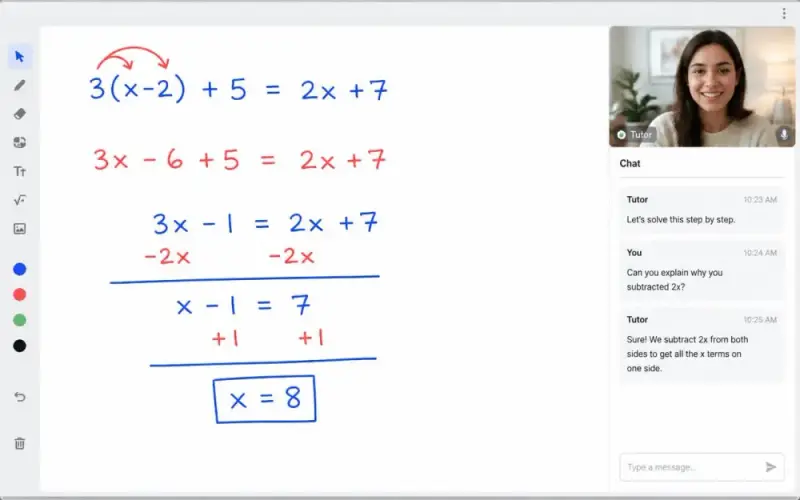
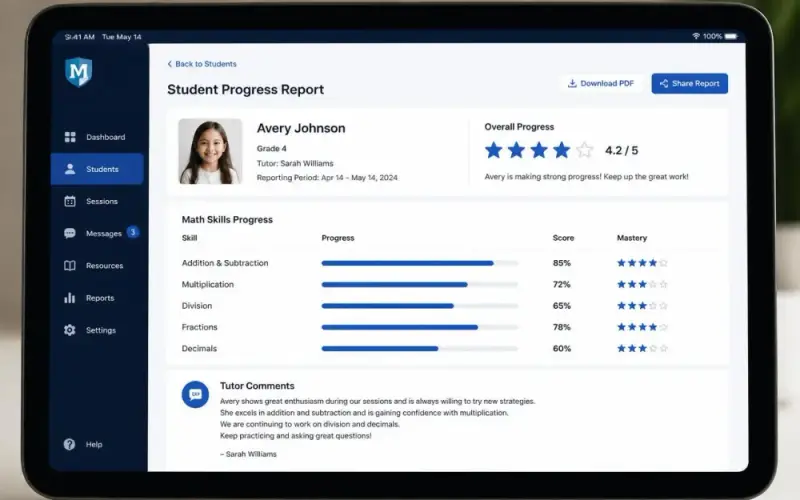
TaleemSquare ACT Math tutoring is live, one-to-one preparation for the math test of the enhanced ACT, taught in 45-minute online lessons. Tutors review number and quantity, algebra, functions, geometry, and statistics and probability, the math students typically learn before Grade 12, and build steady pacing for test day.
The enhanced math test has 45 questions in 50 minutes, each with four answer choices, which gives a little more time per question than the old format. Lessons start after a free assessment, with WhatsApp updates for parents, from $85 a month.
- Format
- Live, one-to-one, online
- Lesson length
- 45 minutes
- Level
- Ages 15-18
- Price
- From $85 a month
What changes after a term of lessons
A steady pace through 45 questions
Moves through the test at a little over a minute per question without losing five minutes on one stubborn problem.
Broad content coverage
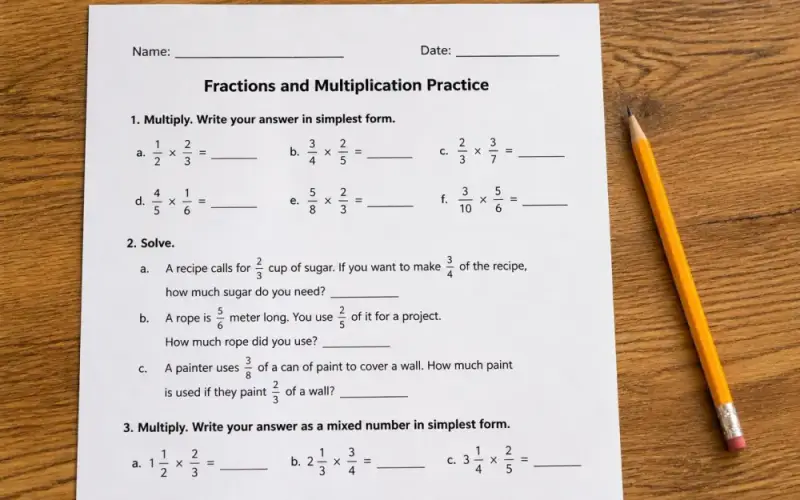
Handles the full spread, from percentages and linear equations to logarithmic functions, triangle and circle problems, trig ratios and probability.
Smart calculator use
Uses an approved calculator, or the built-in Desmos calculator on the online test, to check and speed up work rather than replace thinking.
What we cover
Lessons follow your child's own school or homeschool curriculum. These are the areas we work on most at this level.
Number and quantity (10-12%)
Real and complex number systems, integer and rational exponents, and basic work with vectors and matrices.
Algebra (17-20%)
Solving, graphing and modeling linear, polynomial and radical equations, exponential relationships and systems of equations, including simple matrix forms.
Functions (17-20%)
Function notation and representation, linear, radical, piecewise, polynomial and logarithmic functions, and the key features of their graphs.
Geometry (17-20%)
Shapes and solids, congruence and similarity, surface area and volume, missing values in triangles and circles, trig ratios and equations of conic sections.
Statistics and probability (12-15%)
Center and spread of distributions, data collection methods, relationships in two-variable data, sample spaces and probabilities.
Integrating essential skills (20%)
Rates, percentages, proportional relationships, area and volume, averages and medians, applied in more complex, multi-step problems.
Modeling
Questions from every category that ask students to build, interpret or judge a model of a real situation, reported as its own measure.
Test-day pacing
Target times, triage of slow questions and a firm rule to answer everything, since the ACT gives no penalty for incorrect answers.

Signs your child could use help
- Runs out of time before the last math questions
- Geometry and trig feel rusty since earlier grades
- Strong in class but ACT practice scores lag
- Unsure whether the ACT or SAT suits them better
- Makes slips on percentages and multi-step word problems
- Wants a stronger Math score for a STEM application
One of these on its own is normal. Two or three together usually point to a specific gap, and finding it is what the free assessment is for.
Taught to your curriculum, wherever you live
The ACT (enhanced format): Math test
Offered on national test dates and through state and district testing. The Composite is the average of English, math and reading on a 1-36 scale; science and writing are optional. Students who add science also receive a STEM score, the average of math and science.
ACT for UK-based students
UK students applying to US colleges can take the ACT at international test centers. For UK university entry, A-levels or equivalent qualifications are the usual route, so the ACT matters mainly for US applications.
Level: GCSE Higher Maths plus some AS topics
ACT for Canadian students
Canadian universities rely mostly on high school marks, but students aiming for US colleges may take the ACT at test centers in Canada. Its math broadly matches provincial courses up to early Grade 12.
Level: Math up to early Grade 12
ACT for students in Australia
Australian universities use the ATAR, so the ACT is mainly for students applying to US colleges. International testing moved to the enhanced format in 2026, and lessons run in your local time zone.
Level: Math up to early Year 12
Inside a 45-minute ACT Math lesson
One 45-minute session. Tutors adjust the timings to your child.
6 min
Speed round
Five quick questions at test pace.
13 min
Category review
One reporting category, such as functions or geometry, retaught.
14 min
Mixed timed set
Questions drawn from several categories, answered against the clock.
8 min
Review
Each miss traced to its cause: content, reading or pacing.
4 min
Wrap-up
Next steps and a WhatsApp update for you.
How we prepare students for ACT Math
Breadth before depth
The ACT samples many topics lightly, so tutors refresh each category quickly and then spend longer where practice reveals gaps.
Quick questions first
Students learn to spot questions they can answer fast, bank that time, and return to the multi-step ones with minutes in hand.
The right calculator
We check your child's calculator against the ACT policy, which bans CAS models such as the TI-89, and practise with Desmos for online testers.
Four-choice elimination
With four answer choices, ruling out one or two wrong options changes the odds considerably. We practise eliminating before calculating.

Simple monthly plans
$85a month for 2 one-to-one math lessons a week
- Free 45-minute assessment first
- No contract, cancel any month
- No registration fee
- 4-class money-back promise
- Switch tutor at no cost
- WhatsApp update after every class
Starter
2 lessons a week, best for keeping up with school
$85/mo
GrowthMost chosen
3 lessons a week, best for catching up + building confidence
$119/mo
Intensive
4 lessons a week, best for exam prep & fast improvement
$149/mo
Common worries, honest answers
“My child already practised for the old ACT.”
That practice still builds skills, but timing should now match the enhanced format of 45 questions, 50 minutes and four answer choices. We use materials written for the current test.
“Should my child take the science section?”
Science is optional and does not affect the Composite score. Some colleges or programs may want it, so check their requirements. Our lessons focus on the math test.
“Can you guarantee a 30 or above?”
No. We do not promise scores. We do promise structured lessons, honest practice results and a plan that changes as your child improves.
Frequently asked questions
How many questions are on the ACT Math test?
Is a calculator allowed on the ACT Math test?
What math is on the ACT?
How much does an online ACT math tutor cost?
Is the ACT easier now that it is shorter?
Is the ACT or the SAT better for math?
Book a free 45-minute assessment
Your child meets a tutor for a real one-to-one session. You get an honest read on where they are and what would help, even if the answer is that they don't need tutoring right now.
- 1
We reply on WhatsApp
Usually within 10 minutes, to find a time that suits your family.
- 2
Your child meets the tutor
A relaxed 45-minute session to see their level and how they learn.
- 3
You decide
You get a recommendation and a plan. No card details, no pressure.