
Middle and high school · Ages 12-18
Probability Tutor: Clear Help With Tricky Questions
Tree diagrams, combinations and conditional probability, broken down until your child can set them up alone.
Prefer to ask a question first? Chat on WhatsApp

How it works, in short
Probability tutoring at TaleemSquare is a live, one-to-one lesson of 45 minutes on the probability your child meets at school: simple and compound events, tree and Venn diagrams, counting with permutations and combinations, conditional probability, expected value and probability distributions.
Probability questions are short but easy to misread, so tutors focus on setting each one up correctly. Lessons suit middle school through AP, GCSE and A-level, from $85 a month.
- Format
- Live, one-to-one, online
- Lesson length
- 45 minutes
- Level
- Ages 12-18
- Price
- From $85 a month
What changes after a term of lessons
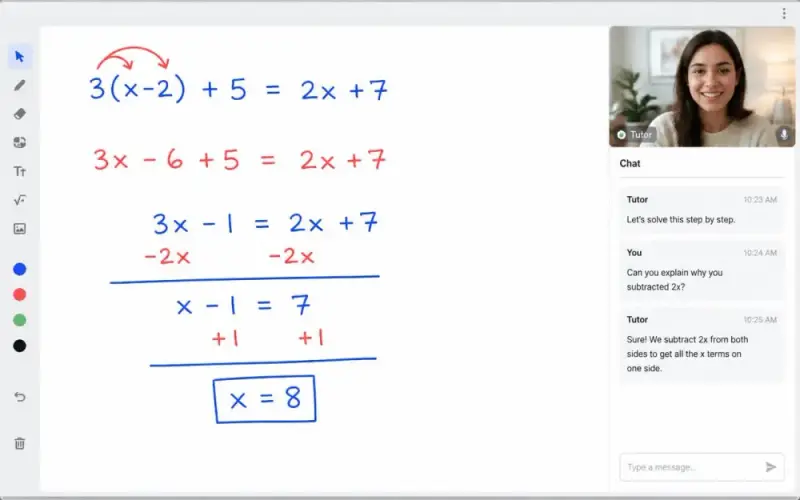
Sets up questions correctly
Decides whether events are independent, mutually exclusive or conditional before calculating anything.
Counts systematically
Uses lists, tree diagrams, permutations and combinations without double counting.
Handles distributions
Works with expected value, binomial and normal distributions in the format their exam uses.
What we cover
Lessons follow your child's own school or homeschool curriculum. These are the areas we work on most at this level.
Basic probability
Sample spaces, equally likely outcomes, complements and relative frequency from experiments.
Tree and Venn diagrams
Organizing compound events, with and without replacement, and reading probabilities from diagrams.
Counting principles
The multiplication principle, factorials, permutations and combinations, and when order matters.
Conditional probability
Probability given that an event has happened, two-way tables and independence.
Expected value
Averages of random outcomes, fair games and decision-making examples.
Probability distributions
Discrete distributions, the binomial distribution and links to the normal distribution.

Signs your child could use help
- Gets different answers every time on the same question
- Unsure when to add and when to multiply
- Confuses permutations and combinations
- Without-replacement questions trip them up
- Conditional probability makes no sense yet
- Probability is a weak spot before a big exam
One of these on its own is normal. Two or three together usually point to a specific gap, and finding it is what the free assessment is for.
Taught to your curriculum, wherever you live
Common Core Grade 7 and High School Statistics and Probability; AP Statistics
Probability starts in Grade 7 and returns in high school courses and AP Statistics, including conditional probability and random variables. We follow your child's course.
GCSE Maths probability and A-level statistics
GCSE covers tree diagrams, Venn diagrams, relative frequency and conditional probability on the Higher tier. A-level adds binomial and normal distributions. We follow your exam board.
Level: GCSE probability to A-level statistics
Grade 12 Data Management (Ontario MDM4U) and provincial courses
Counting, probability and probability distributions form a large part of Data Management in Ontario, with similar content elsewhere. Lessons follow the provincial course.
Level: Grade 12 Data Management
Australian Curriculum: Probability; senior courses
Chance and probability from Year 7, conditional probability in Year 10, and distributions in senior Methods courses. We follow your state's syllabus.
Level: Chance and probability, Years 7-12
Inside a 45-minute probability lesson
One 45-minute session. Tutors adjust the timings to your child.
5 min
Warm-up puzzle
A short probability puzzle to get your child thinking.
12 min
Method
Today's technique shown with a diagram first.
13 min
Guided questions
Your child sets up and solves with coaching on the wording.
11 min
Exam questions
Independent practice in the format of their tests.
4 min
Recap
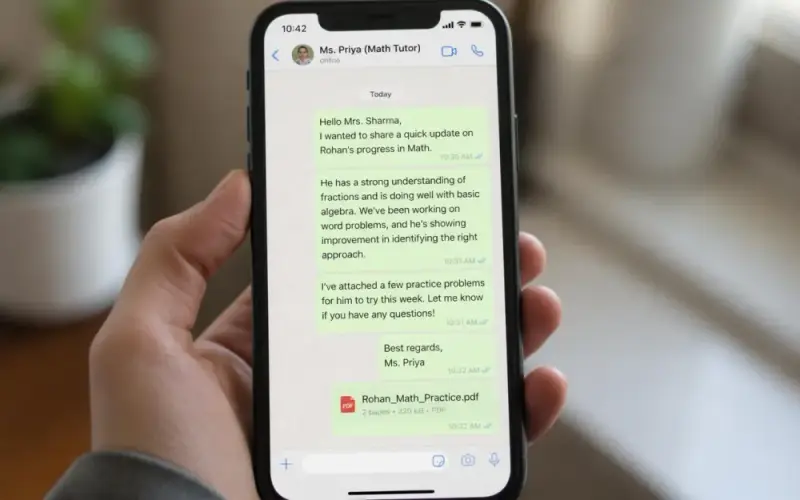
Summary and practice, sent to you on WhatsApp.
How we teach probability
Act it out first
We simulate the situation with coins, cards or a quick sketch so your child sees the outcomes before using a formula.
One question, two methods
Students solve with a diagram and with a formula, then compare. It builds confidence and catches errors.
Read the wording slowly
Words like at least, given that and without replacement change everything. We practise spotting them.
Exam-format practice
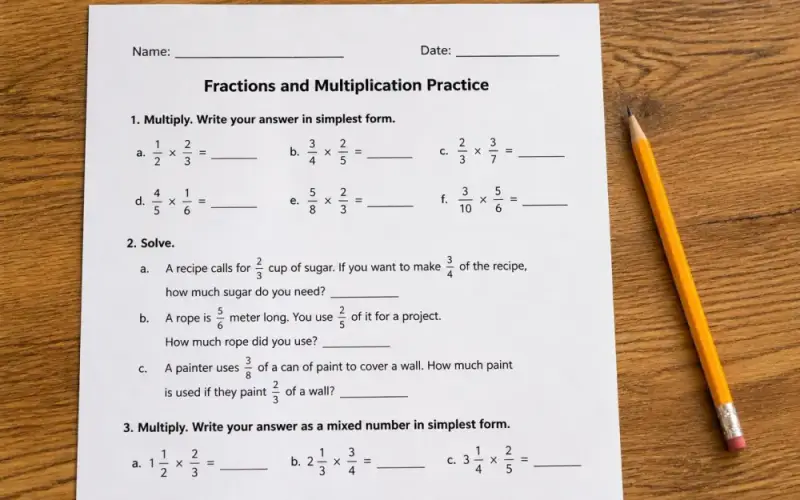
Questions match your child's exam style, from GCSE tree diagrams to AP free-response.
Simple monthly plans
$85a month for 2 one-to-one math lessons a week
- Free 45-minute assessment first
- No contract, cancel any month
- No registration fee
- 4-class money-back promise
- Switch tutor at no cost
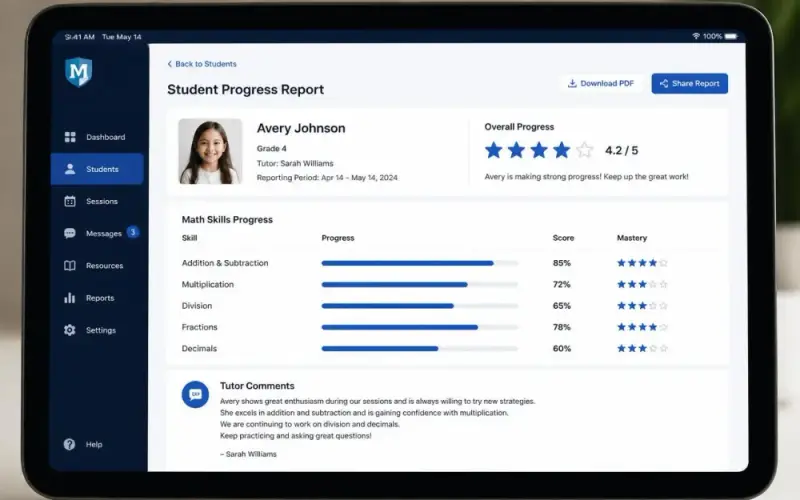
- WhatsApp update after every class
Starter
2 lessons a week, best for keeping up with school
$85/mo
GrowthMost chosen
3 lessons a week, best for catching up + building confidence
$119/mo
Intensive
4 lessons a week, best for exam prep & fast improvement
$149/mo
Common worries, honest answers
“Probability is only one topic. Is it worth a tutor?”
It often appears across several units and exams, and it is a common source of lost marks. Many families book a few months of focused lessons, then pause.
“My child understands in class but not on tests.”
That usually means the wording is the problem. We practise reading and setting up questions until it becomes automatic.
“Can lessons cover other math topics too?”
Yes. The tutor can split lessons between probability and whatever else your child is studying.
Frequently asked questions
What is the difference between permutations and combinations?
How do you explain conditional probability?
What grade is probability taught in?
How much does an online probability tutor cost?
Is probability on the SAT?
Can you help with probability for university courses?
Book a free 45-minute assessment
Your child meets a tutor for a real one-to-one session. You get an honest read on where they are and what would help, even if the answer is that they don't need tutoring right now.
- 1
We reply on WhatsApp
Usually within 10 minutes, to find a time that suits your family.
- 2
Your child meets the tutor
A relaxed 45-minute session to see their level and how they learn.
- 3
You decide
You get a recommendation and a plan. No card details, no pressure.