
Kindergarten to grade 12 · Ages 5-18
MAP Growth Math Tutor: Real Skills Behind the RIT Score
One-to-one math help that turns your child's MAP Growth report into a plan for real growth.
Prefer to ask a question first? Chat on WhatsApp
Already decided? Choose a plan and enroll now, and we schedule the first class in your time zone.

How it works, in short
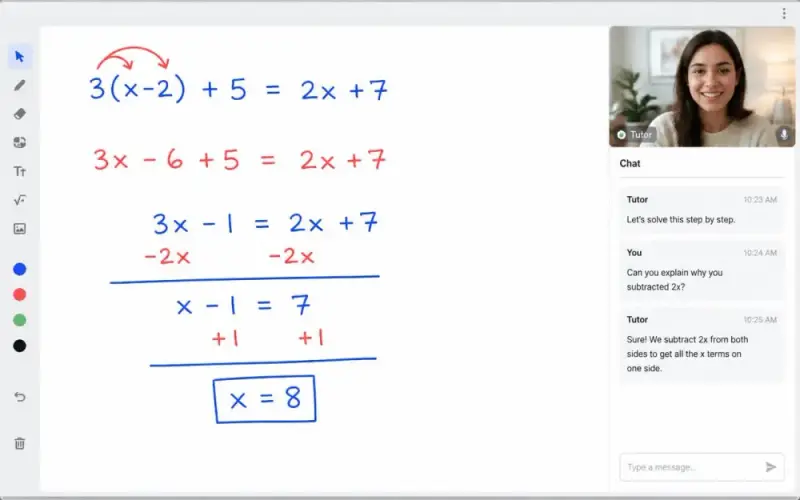
TaleemSquare MAP Growth math tutoring is live, one-to-one online help for students in kindergarten to grade 12 whose schools use NWEA MAP Growth. A tutor reads the Family Report with you, finds the skills behind a low or flat RIT score, and teaches those skills step by step so growth shows up on the next test.
MAP Growth is a computer-adaptive test, and most sessions take 40 to 55 minutes. The goal is real learning, not drilling test items, because a RIT score is not a grade. Plans start at $85 a month, with no contract.
- Format
- Live, one-to-one, online
- Lesson length
- 45 minutes
- Level
- Ages 5-18
- Price
- From $85 a month
- Per hour of tutoring
- About $14.17
- Families taught
- 500+ since 2023
What changes after a term of lessons
A clear picture of the gaps
We use the RIT score and goal areas on the report to find which skills need work, then confirm them in the first lesson.
Real growth between terms
Steady lessons on the weakest goal areas, so the next score reflects skills your child actually learned.
Calm with an adaptive test
Knows questions get harder or easier with each answer, so it stays calm when a question feels hard and works carefully.
What we cover
Lessons follow your child's own school or homeschool curriculum. These are the areas we work on most at this level.
Reading the Family Report
What the RIT score, percentile, growth percentile and projected proficiency mean, and which questions to ask the teacher.
Number sense and operations
Place value, the four operations and mental math, often the root of a low score in the early grades.
Fractions and decimals
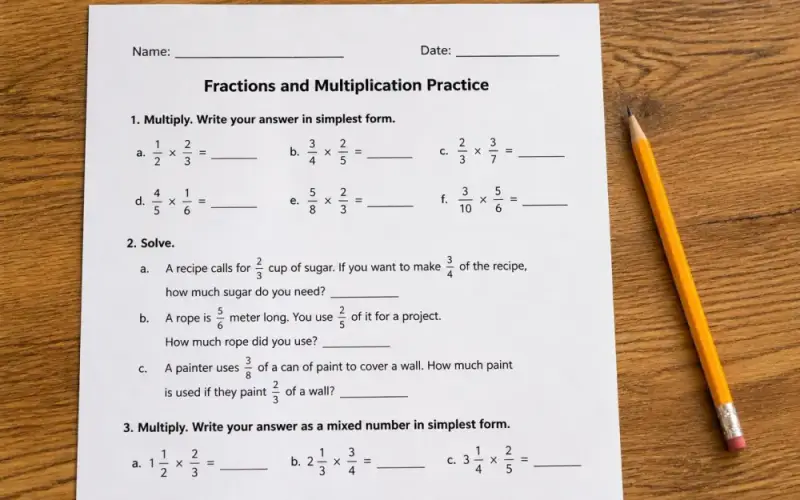
Fraction equivalence, comparing fractions and operations with fractions and decimals, a common sticking point in grades 3 to 6.
Algebraic thinking
Patterns, expressions and equations, from early number sentences to linear equations in middle school.
Geometry and measurement
Shapes, area, volume, angles and units of measure, matched to the goal areas on your child's report.
Data and probability
Reading graphs and tables, measures of center and basic probability for older students.
Moving ahead
When a school uses MAP Growth as one data point for advanced math, we teach next year's skills to strong students.

Signs your child could use help
- MAP Growth math score stayed flat or dropped between terms
- Scored in a low percentile on the Family Report
- One goal area sits well below the others
- The teacher flagged math for extra support after a MAP test
- The school uses MAP scores for advanced math placement
- Gets anxious when adaptive questions start to feel hard
One of these on its own is normal. Two or three together usually point to a specific gap, and finding it is what the free assessment is for.
Taught to your curriculum, wherever you live
MAP Growth (NWEA, part of HMH)
Schools choose when to test, often in fall, winter and spring. Scores use the grade-independent RIT scale, and the 2025 norms, based on 13.8 million students, compare your child with students in the same grade nationally. Schools also use MAP Growth to project state test results.
For families moving from the UK
Because the RIT scale does not depend on year group, we start from your child's actual score and goal areas, then fill any gaps between the UK curriculum and the US grade-level skills behind the test.
Level: Year 1 to Year 13 maths
For families moving from Canada
Provincial math covers similar topics in a different order. We use the MAP Growth report to see where your child stands against US grade-level skills and fill the gaps a move can leave.
Level: Kindergarten to grade 12 math
For families moving from Australia
Australian Curriculum maths covers similar content, but topics can arrive in a different year. We use the report's goal areas to find gaps a move has left and teach those skills first.
Level: Foundation to Year 12 maths
What a MAP Growth math lesson looks like
One 45-minute session. Tutors adjust the timings to your child.
5 min
Warm-up
A quick review question from the last lesson.
12 min
Teach one skill
One standard explained step by step with worked examples.
13 min
Guided practice
Test-style questions with hints as needed.
10 min
Format practice
Adaptive-style questions that get harder as your child answers correctly.
5 min
Wrap-up
What to practice before the next lesson.
Who teaches your child
Every TaleemSquare math tutor passes the same five checks before their first class. Your child keeps the same tutor each week, and if the fit is not right we switch tutor at no cost. Tutors are based in the US, UK, Canada, Australia, Pakistan and India, and all of them teach in English.
Identity and references checked
Every tutor is identity-verified and reference-checked before teaching a student.
Subject test
Tutors pass a subject test before they are matched with a child.
Spoken-English assessment
Lessons are taught in English, so every tutor passes a spoken-English assessment.
Live sample lesson
Tutors teach a live sample lesson before they are hired, to show they can explain clearly.
Open to parents
Classes are one-to-one in a password-protected room. Sit in on any class or ask for a recording.
How MAP Growth math lessons work
Start from the report
Share the latest Family Report, and the first lesson checks the weakest goal areas with a short skills assessment.
Teach the skills, not the test
Lessons teach the underlying math step by step, since real skill growth is what moves a RIT score over time.
Check progress each term
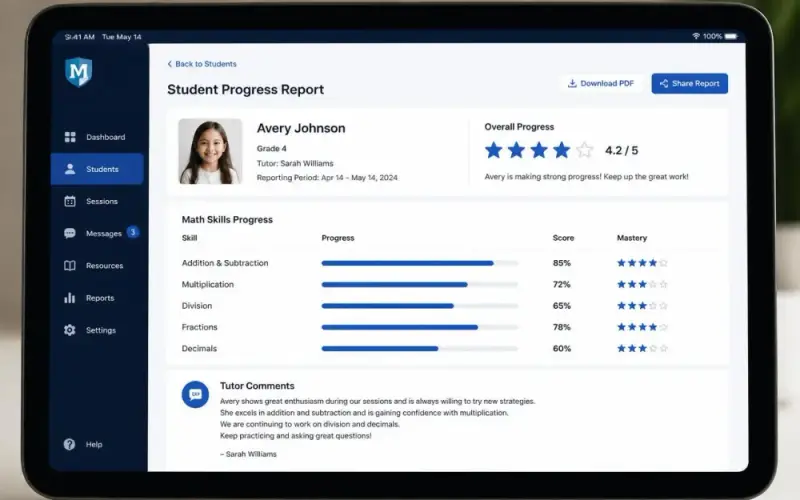
We review each new report with you and adjust the plan to the next set of goals.
Updates for parents
You get a short note after every lesson on what was covered and what to practice next.

Simple monthly plans
$85a month for 2 one-to-one math lessons a week
About $10.63 a lesson, or $14.17 per hour of live one-to-one tutoring.
- Free 45-minute trial assessment, no card details
- No contract, cancel any month
- No registration fee
- 4-class money-back promise
- Switch tutor at no cost
- WhatsApp update after every class
Starter
2 lessons a week, best for keeping up with school
$85/mo
EnrollGrowthMost chosen
3 lessons a week, best for catching up + building confidence
$119/mo
EnrollIntensive
4 lessons a week, best for exam prep & fast improvement
$149/mo
EnrollCommon worries, honest answers
“Can you prepare a child for the MAP Growth test?”
We do not drill test items. MAP Growth measures what your child knows, so the best preparation is learning the skills in the weakest goal areas. A short look at the adaptive format helps your child stay calm.
“My child gets anxious about tests. Will this make it worse?”
We keep early practice calm and short, and build confidence by showing progress. Knowing the format well usually makes test day feel familiar instead of scary.
“Is a RIT score like a grade?”
No. NWEA says a RIT score is not a grade. It shows where your child is on a scale that runs across grades, so the useful questions are how much they grew and which goal areas need work.
Frequently asked questions
What is a RIT score on MAP Growth?
How long does the MAP Growth math test take?
Did MAP Growth percentiles change in 2025?
Is MAP Growth used for gifted or advanced math placement?
What does the MAP Growth Family Report show?
How much does MAP Growth math tutoring cost?
Book a free 45-minute assessment
Your child meets a tutor for a real one-to-one session. You get an honest read on where they are and what would help, even if the answer is that they don't need tutoring right now.
- 1
We reply on WhatsApp
Usually within 10 minutes, to find a time that suits your family.
- 2
Your child meets the tutor
A relaxed 45-minute session to see their level and how they learn.
- 3
You decide
You get a recommendation and a plan. No card details, no pressure.