
Kindergarten to grade 8 · Ages 5-14
CogAT Test Prep: One-to-One Tutor for Grades K-8
Calm, one-to-one practice with CogAT question types and the reasoning skills behind them.
Prefer to ask a question first? Chat on WhatsApp
Already decided? Choose a plan and enroll now, and we schedule the first class in your time zone.

How it works, in short
TaleemSquare CogAT prep is live, one-to-one online help for children in kindergarten to grade 8 who will take the Cognitive Abilities Test, often for gifted or advanced program screening. A tutor introduces the verbal, quantitative and nonverbal batteries and builds the reasoning behind them, such as number patterns, analogies and spatial thinking.
CogAT measures reasoning, not school content, and some districts say children are not expected to prepare as they would for an achievement test. So we never use real test items. We focus on familiarity and genuine skills. Plans start at $85 a month, with no contract.
- Format
- Live, one-to-one, online
- Lesson length
- 45 minutes
- Level
- Ages 5-14
- Price
- From $85 a month
- Per hour of tutoring
- About $14.17
- Families taught
- 500+ since 2023
What changes after a term of lessons
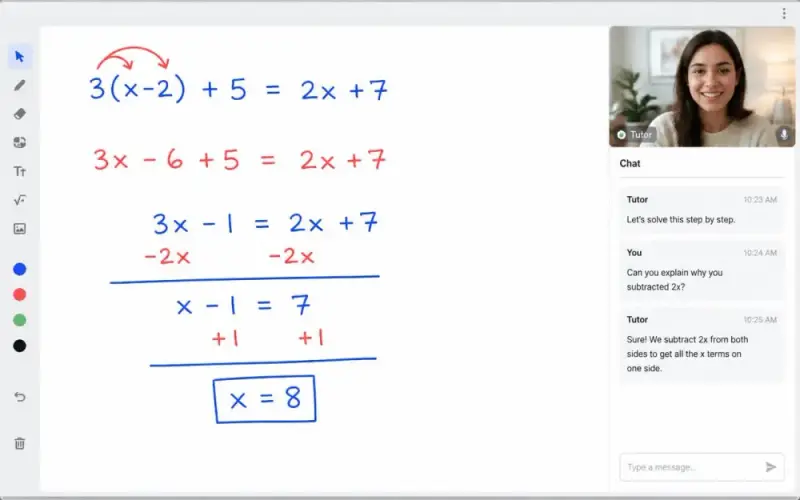
Familiar with every question type
Knows what Number Series, Figure Matrices, Paper Folding and the other subtests look like, so nothing on test day is a surprise.
Stronger reasoning skills
Practices spotting patterns, relationships and rules in numbers, words and shapes, skills that also help in everyday math.
Calm and focused
Works through short timed sets that match the roughly 10-minute subtests from grade 3 up, without rushing or freezing.
What we cover
Lessons follow your child's own school or homeschool curriculum. These are the areas we work on most at this level.
Number Series and Number Puzzles
Finding the rule in a sequence of numbers and solving simple number equations, from the quantitative battery.
Number Analogies
Seeing how one pair of numbers is related and applying the same rule to a new pair.
Figure Matrices and Figure Classification
Spotting how shapes change across a grid or what a group of figures has in common, from the nonverbal battery.
Paper Folding
Picturing where holes appear when a folded paper is punched and opened, a spatial reasoning skill.
Verbal Analogies and Classification
Word relationships and categories for grade 3 and up, supported by vocabulary building.
Picture-based items for K to 2
In kindergarten to grade 2 the items use pictures, so young children practice picture versions of each question type.
Reasoning habits
Checking every answer choice, ruling out options and moving on when stuck, so time is used well.

Signs your child could use help
- Will take CogAT for a gifted or advanced program this year
- Has never seen this kind of reasoning question before
- Gets anxious with timed tests or new formats
- Strong in math but unsure with shapes and spatial puzzles
- Is in a grade where the district screens all students
- Wants to build reasoning skills beyond the classroom
One of these on its own is normal. Two or three together usually point to a specific gap, and finding it is what the free assessment is for.
Taught to your curriculum, wherever you live
Cognitive Abilities Test (CogAT, Riverside Insights)
CogAT has verbal, quantitative and nonverbal batteries with three subtests each. Form 7 and Form 8 are both in use, and 2024 norms arrived in August 2025. Some districts test whole grades, such as Cobb County, Georgia, in grades 1, 3 and 7.
For families moving from the UK
CogAT is not part of the UK curriculum, so most children have not seen its question types. We introduce each format gently and build the reasoning skills behind it.
Level: Year 1 to Year 9
For families moving from Canada
CogAT measures reasoning rather than what was taught in school, so a move from Canada does not put your child behind. We introduce the question types and practice them calmly.
Level: Kindergarten to grade 8
For families moving from Australia
CogAT question types are likely new to children who studied in Australia. We introduce each format and build the number, word and spatial reasoning behind it.
Level: Foundation to Year 8
What a CogAT prep lesson looks like
One 45-minute session. Tutors adjust the timings to your child.
5 min
Warm-up
A quick puzzle to get thinking.
12 min
Number reasoning
Number Series, Number Puzzles or Number Analogies, solved step by step.
13 min
Shape reasoning
Figure Matrices, Figure Classification or Paper Folding.
10 min
Words or pictures
Verbal or picture-based items for your child's level.
5 min
Wrap-up
A fun puzzle to try before the next lesson.
Who teaches your child
Every TaleemSquare math tutor passes the same five checks before their first class. Your child keeps the same tutor each week, and if the fit is not right we switch tutor at no cost. Tutors are based in the US, UK, Canada, Australia, Pakistan and India, and all of them teach in English.
Identity and references checked
Every tutor is identity-verified and reference-checked before teaching a student.
Subject test
Tutors pass a subject test before they are matched with a child.
Spoken-English assessment
Lessons are taught in English, so every tutor passes a spoken-English assessment.
Live sample lesson
Tutors teach a live sample lesson before they are hired, to show they can explain clearly.
Open to parents
Classes are one-to-one in a password-protected room. Sit in on any class or ask for a recording.
How CogAT prep lessons work
Start gently
The first lesson tries a few sample-style questions from each battery to see which feel easy and which need work.
Teach the reasoning, not answers
We explain the thinking behind each question type with our own practice items, never real test questions.
Short, calm practice
Sessions mix question types in short sets, with timed practice added only as test day gets closer.
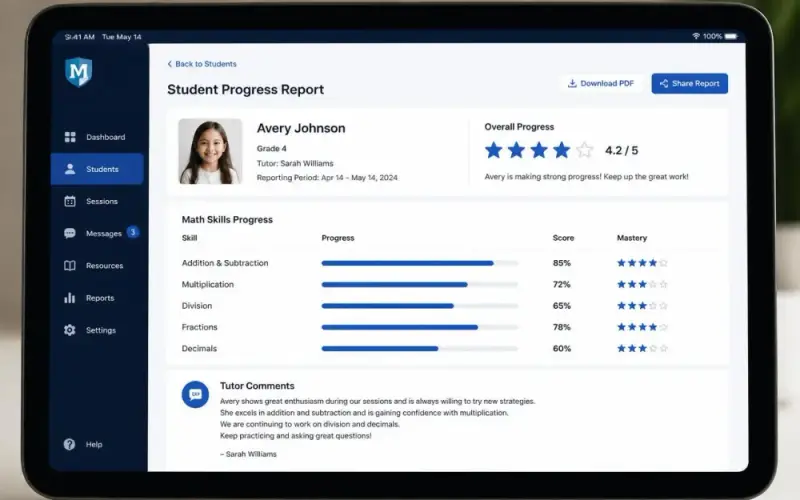
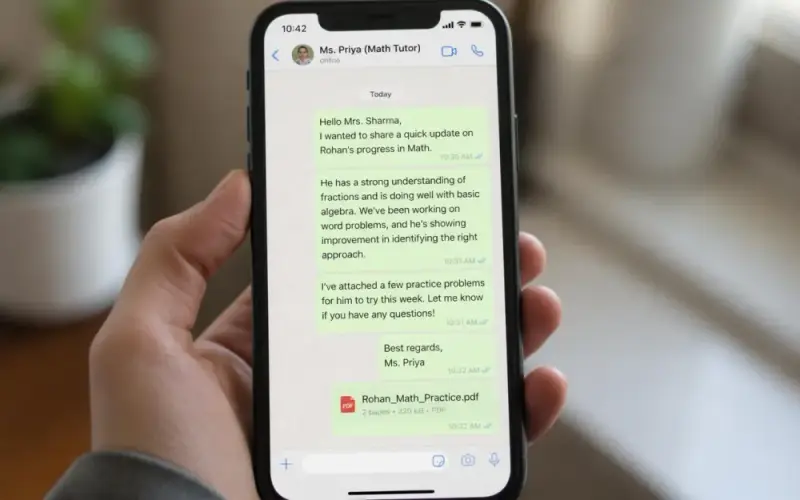
Updates for parents
You get a short note after every lesson on what was covered and what to practice next.
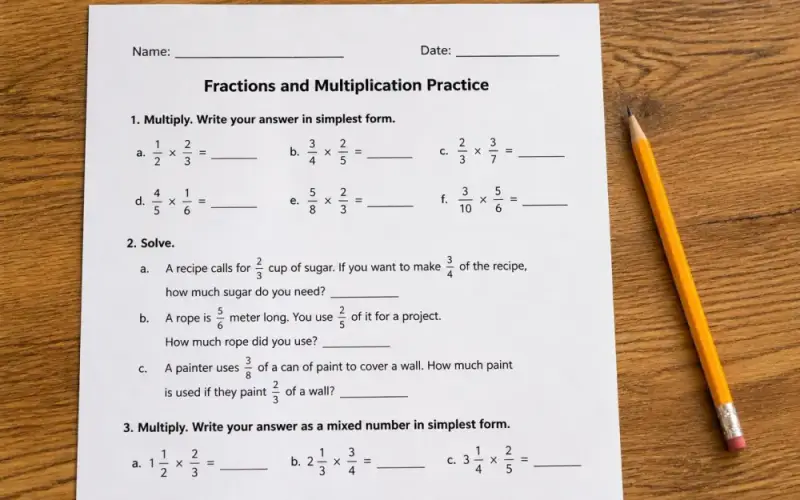
Simple monthly plans
$85a month for 2 one-to-one math lessons a week
About $10.63 a lesson, or $14.17 per hour of live one-to-one tutoring.
- Free 45-minute trial assessment, no card details
- No contract, cancel any month
- No registration fee
- 4-class money-back promise
- Switch tutor at no cost
- WhatsApp update after every class
Starter
2 lessons a week, best for keeping up with school
$85/mo
EnrollGrowthMost chosen
3 lessons a week, best for catching up + building confidence
$119/mo
EnrollIntensive
4 lessons a week, best for exam prep & fast improvement
$149/mo
EnrollCommon worries, honest answers
“Is it fair to prepare for CogAT?”
Some districts say children are not expected to prepare as they would for an achievement test. We agree that drilling is not the goal. Knowing the question types and building real reasoning skills simply helps your child show what they can do.
“My child is young. Is this too much pressure?”
For kindergarten to grade 2 we keep lessons short and game-like, with picture puzzles. If your child seems stressed, we slow down. The aim is a relaxed child who has seen the formats before.
“Will this guarantee a gifted placement?”
No one can promise that. Districts set their own cut-offs, often alongside achievement scores and other evidence. Cobb County, Georgia, for example, flags students at the 90th percentile on CogAT for further review.
Frequently asked questions
What is on the CogAT test?
How long is the CogAT?
How is CogAT scored?
What CogAT score do you need for gifted programs?
What is the difference between CogAT Form 7 and Form 8?
How much does CogAT prep cost?
Book a free 45-minute assessment
Your child meets a tutor for a real one-to-one session. You get an honest read on where they are and what would help, even if the answer is that they don't need tutoring right now.
- 1
We reply on WhatsApp
Usually within 10 minutes, to find a time that suits your family.
- 2
Your child meets the tutor
A relaxed 45-minute session to see their level and how they learn.
- 3
You decide
You get a recommendation and a plan. No card details, no pressure.