
Kindergarten to Grade 12 · Ages 6-18
Online Math Tutoring for Children With Dyscalculia
Patient one-to-one lessons that rebuild number sense with visual models, number lines and small, checkable steps.
Prefer to ask a question first? Chat on WhatsApp
Already decided? Choose a plan and enroll now, and we schedule the first class in your time zone.

How it works, in short
TaleemSquare offers one-to-one online math lessons for children with dyscalculia or lasting trouble with numbers. Tutors rebuild number sense with concrete and visual models, number lines and short, systematic steps, the kind of methods the US Institute of Education Sciences recommends for students who struggle with math, and they keep the same routine every lesson.
We are a tutoring service, not a clinical or special-education provider, and we do not diagnose. Lessons can work alongside an IEP or school support. Plans start at $85 a month, with no contract, and the first assessment is free.
- Format
- Live, one-to-one, online
- Lesson length
- 45 minutes
- Level
- Ages 6-18
- Price
- From $85 a month
- Per hour of tutoring
- About $14.17
- Families taught
- 500+ since 2023
What changes after a term of lessons
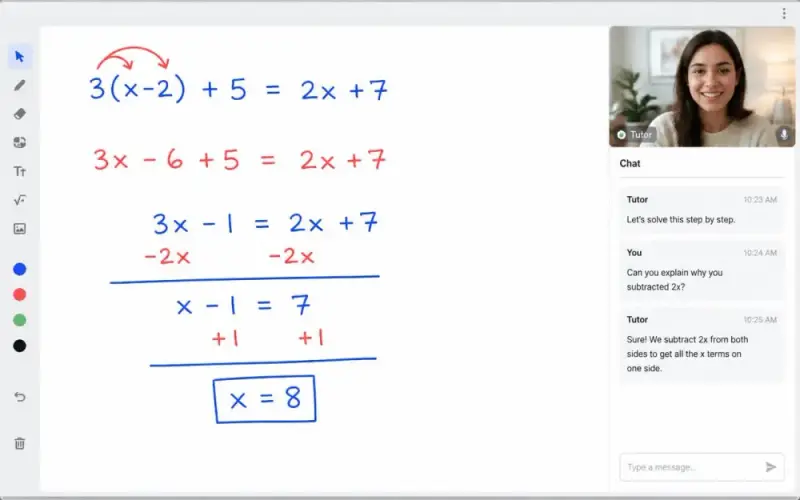
Stronger number sense
Understands what numbers mean, how they compare and how they combine, instead of relying on memorized steps.
Less math anxiety
Small, achievable steps and steady success help a child who has felt behind start to trust their own thinking.
Real progress toward grade level
Foundations are rebuilt first, then linked to the math your child's class is doing now.
What we cover
Lessons follow your child's own school or homeschool curriculum. These are the areas we work on most at this level.
Counting and number sense
Counting, comparing quantities and connecting numerals to amounts, the base that many later skills depend on.
Place value
Ones, tens and hundreds with virtual blocks and charts, so multi-digit numbers make sense.
Number lines
One consistent picture for addition, subtraction, fractions and negative numbers.
Math facts and fluency
Short, regular fact practice, including brief timed games, so basic facts get quicker over time.
Fractions and decimals
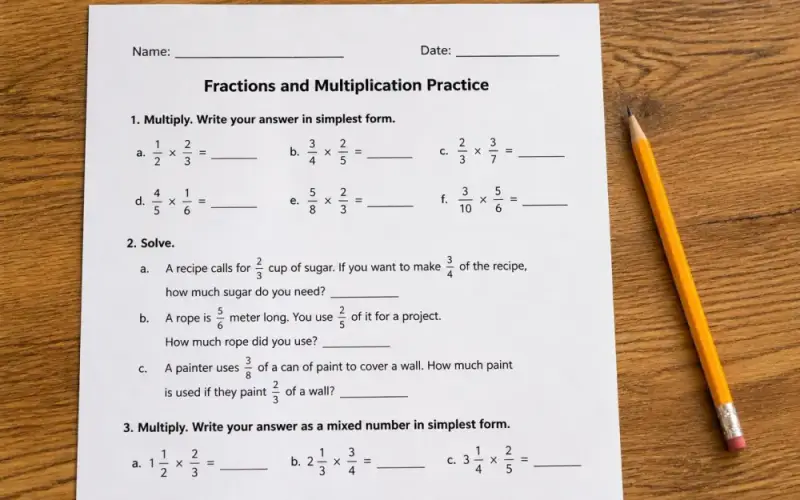
Fraction strips, area models and number lines before rules, a common sticking point after grade 3.
Word problems
A simple routine for reading a problem, drawing it and choosing the operation.
Time, money and measurement
Everyday math like telling time, counting money and measuring, which many children with dyscalculia find hard.

Signs your child could use help
- Still counts on fingers for basic facts long after classmates stopped
- Struggles to tell which of two numbers is bigger
- Mixes up place value, such as 31 and 13
- Has regular, lasting trouble with grade-level arithmetic
- Finds telling time, money or measuring unusually hard
- Gets anxious or upset whenever math comes up
One of these on its own is normal. Two or three together usually point to a specific gap, and finding it is what the free assessment is for.
Taught to your curriculum, wherever you live
Grade-level standards with an IEP or school intervention
Tutors teach toward your child's grade-level math while filling earlier gaps, and can respect accommodations in an IEP or 504 plan. Under federal special education rules, a parent can ask the school for an evaluation if a learning disability is suspected.
National Curriculum with SEN support or an EHCP
Tutors follow your child's year group and can work alongside SEN support or an Education, Health and Care plan, using the adjustments that help in school.
Level: Any year, including pupils with SEND support
Provincial curricula with an Individual Education Plan
Lessons follow your province's curriculum and can reflect accommodations in your child's IEP.
Australian Curriculum with school adjustments
Tutors follow your child's year level and can mirror reasonable adjustments made at school, including for NAPLAN.
Level: Foundation to Year 12
What a dyscalculia-friendly lesson looks like
One 45-minute session. Tutors adjust the timings to your child.
4 min
Check-in
A quick chat and a look at today's plan.
6 min
Number warm-up
Counting, comparing or a short fact game.
10 min
Mini-lesson
One idea, shown with blocks, drawings or a number line.
12 min
Guided practice
Short sets with the tutor checking each step.
8 min
Apply it
A word problem or everyday example using the same idea.
5 min
Wrap-up
What went well and one thing to practice at home.
Who teaches your child
Every TaleemSquare math tutor passes the same five checks before their first class. Your child keeps the same tutor each week, and if the fit is not right we switch tutor at no cost. Tutors are based in the US, UK, Canada, Australia, Pakistan and India, and all of them teach in English.
Identity and references checked
Every tutor is identity-verified and reference-checked before teaching a student.
Subject test
Tutors pass a subject test before they are matched with a child.
Spoken-English assessment
Lessons are taught in English, so every tutor passes a spoken-English assessment.
Live sample lesson
Tutors teach a live sample lesson before they are hired, to show they can explain clearly.
Open to parents
Classes are one-to-one in a password-protected room. Sit in on any class or ask for a recording.
How we teach children who find numbers hard
Start where your child is secure
The free assessment checks counting, place value and facts, so lessons begin at the right point rather than at grade level.
Concrete, then visual, then abstract
Ideas start with virtual blocks and drawings, move to diagrams and number lines, and only then to symbols.
Small, systematic steps
Each lesson teaches one idea at a time, with clear math language and plenty of guided practice.
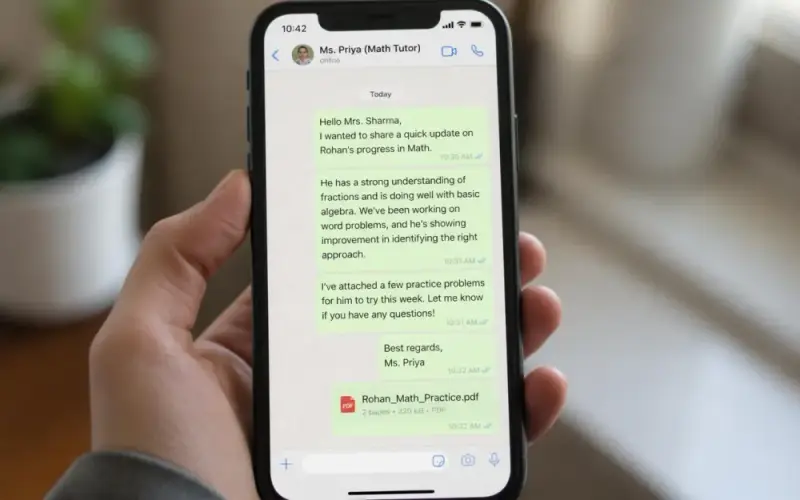
Progress updates on WhatsApp
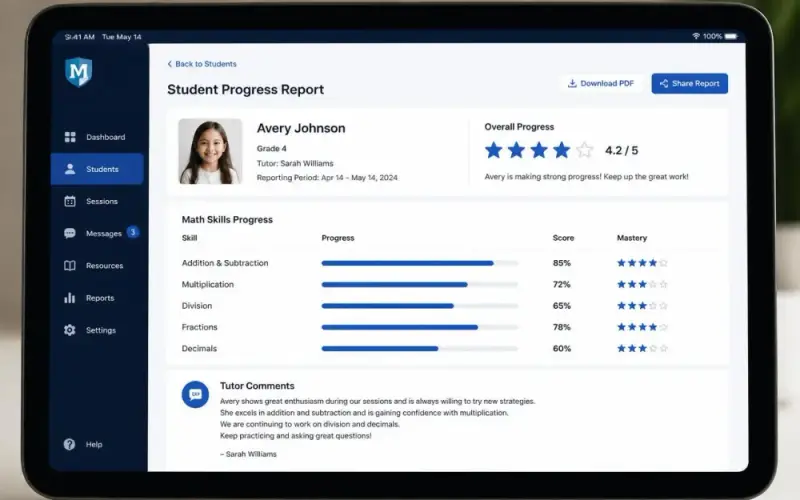
You get regular updates on what was covered, what improved and one thing to practice at home.
Simple monthly plans
$85a month for 2 one-to-one math lessons a week
About $10.63 a lesson, or $14.17 per hour of live one-to-one tutoring.
- Free 45-minute trial assessment, no card details
- No contract, cancel any month
- No registration fee
- 4-class money-back promise
- Switch tutor at no cost
- WhatsApp update after every class
Starter
2 lessons a week, best for keeping up with school
$85/mo
EnrollGrowthMost chosen
3 lessons a week, best for catching up + building confidence
$119/mo
EnrollIntensive
4 lessons a week, best for exam prep & fast improvement
$149/mo
EnrollCommon worries, honest answers
“Are your tutors dyscalculia specialists?”
No. Our tutors adapt their teaching for children who find numbers hard, but we are not a clinical or special-education service and we do not diagnose. For an evaluation, speak to your school or a qualified professional.
“My child is far behind grade level. Where do you start?”
Where your child is secure, even if that is several grades back. Rebuilding foundations first usually makes grade-level work easier, and the tutor links each lesson back to current classwork.
“Are 45-minute lessons too long?”
Lessons are broken into short activities that change every few minutes. If that is still too long for your child, raise it at the free assessment and we will suggest options.
Frequently asked questions
What is dyscalculia?
What are the signs of dyscalculia in a child?
Can tutoring help a child with dyscalculia?
How do I get my child evaluated for dyscalculia?
Do you work with IEPs and 504 plans?
How much does math tutoring for dyscalculia cost?
Sources
- Institute of Education Sciences (WWC): Assisting Students Struggling with Mathematics, Intervention in the Elementary Grades (2021)
- NICHD: Does your child struggle with math? (math learning disability infographic)
- 34 CFR 300.8: Child with a disability (specific learning disability)
- 34 CFR 300.301: Initial evaluations
Book a free 45-minute assessment
Your child meets a tutor for a real one-to-one session. You get an honest read on where they are and what would help, even if the answer is that they don't need tutoring right now.
- 1
We reply on WhatsApp
Usually within 10 minutes, to find a time that suits your family.
- 2
Your child meets the tutor
A relaxed 45-minute session to see their level and how they learn.
- 3
You decide
You get a recommendation and a plan. No card details, no pressure.