
Primary school, Year 6 · Ages 11-12
Selective School Test Maths Tutor for Year 6, Online
One-to-one online lessons in the maths, reading and writing behind the NSW selective high school test, for Year 6.
Prefer to ask a question first? Chat on WhatsApp
Already decided? Choose a plan and enroll now, and we schedule the first class in your time zone.

How it works, in short
TaleemSquare offers live one-to-one online lessons of 45 minutes for Year 6 children preparing for the NSW Selective High School Placement Test, sat in Year 6 for Year 7 entry. Lessons cover Mathematical Reasoning, plus reading and writing if you want them. We do not run separate Thinking Skills courses, but problem-solving questions that are really maths are practised in lessons.
For Year 7 entry in 2028, NSW lists applications from 5 November 2026 to 15 February 2027, with the test on 13 and 14 May 2027. Selective places are competitive, so we promise no outcome. Plans start at A$130 a month for two 45-minute lessons a week, about A$30 a week, with a free assessment first.
- Format
- Live, one-to-one, online
- Lesson length
- 45 minutes
- Level
- Ages 11-12
- Price
- From A$130 a month
- Per hour of tutoring
- About A$21.67
- Families taught
- 500+ since 2023
What changes after a term of lessons
Secure in Year 5 and 6 maths
Works confidently with number, fractions, measurement, shapes and patterns, the school maths that NSW says its test questions are based on.
Reasons through multi-step problems
Plans a method, shows working on paper and checks that the answer makes sense before moving on.
Used to the on-screen test
Knows the computer-based layout, the five answer options and how to pace 35 questions in 40 minutes without a calculator.
What we cover
Lessons follow your child's own school or homeschool curriculum. These are the areas we work on most at this level.
Number and place value
Whole-number operations, place value, rounding, multiples and division with remainders, used inside multi-step word problems.
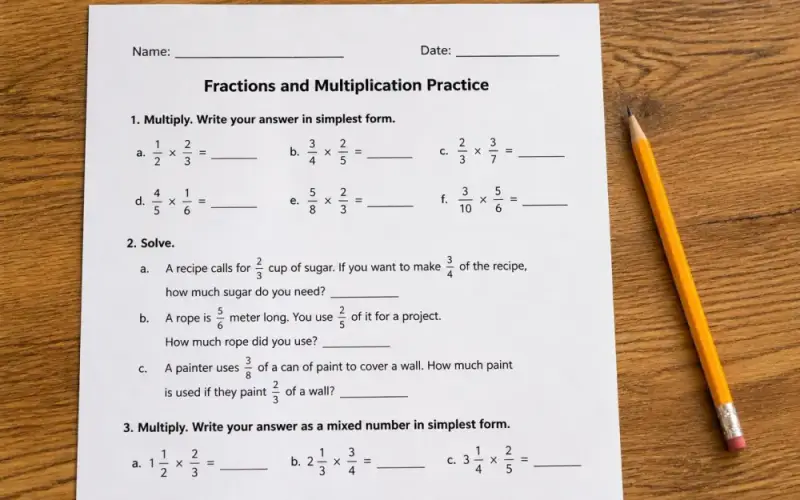
Fractions and sharing
Shares of wholes and groups, comparing fractions, and sharing problems where each part must be tracked carefully.
Measurement, time and money
Area, perimeter, time, mass, capacity and money, with unit conversions, often asked as multi-step problems with a diagram.
Geometry and symmetry
Angles, symmetry, 3D shapes, nets and rotation, often asked through diagrams that need careful reading.
Algebra and patterns
Missing values, number patterns and rules, and problems where two unknowns are linked, solved by careful reasoning.
Data and chance
Reading bar and line graphs, and finding probabilities from spinners and bags of objects.
Test technique on screen
35 questions in 40 minutes, five options each, no calculator and paper for working out. We practise pacing and what to do when stuck.
Reading and writing
Optional. Reading is 17 questions in 45 minutes and Writing is one task in 30 minutes, so lessons can practise close reading and planning.
One typical question, worked through
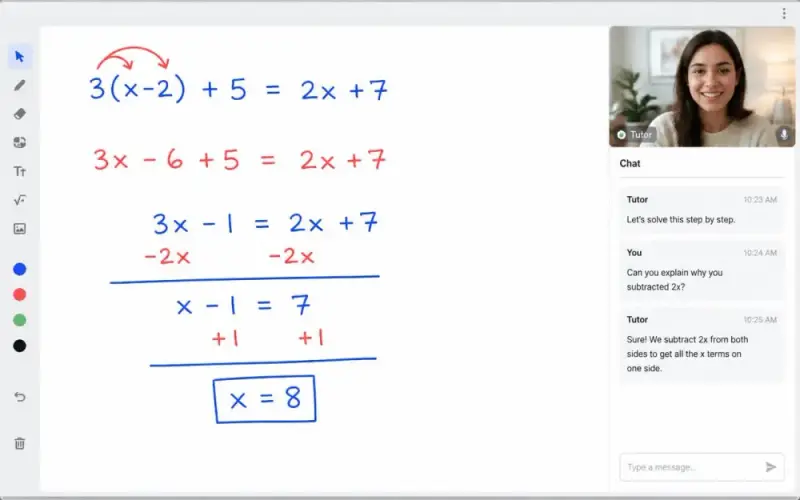
How a tutor talks a student through a maths question at this level. The student does the working on the shared whiteboard; the tutor asks the next question.
Priya has some stickers. She gives one quarter of them to her sister. Then she gives one third of the stickers she has left to a friend. Priya now has 18 stickers. How many stickers did she start with?
- Track what is left after each step. After giving away one quarter, Priya has 3/4 of her stickers.
- She then gives away 1/3 of what is left, so 2/3 of that amount remains. Two thirds of three quarters is 6/12, which is 1/2 of the original stickers.
- So 18 stickers is half of the start, and 18 × 2 = 36.
- Check by running the story forward: 36 ÷ 4 = 9 go to her sister, leaving 27. One third of 27 is 9, leaving 18. It matches.
Answer: 36 stickers
The slip we see most often
Adding 1/4 and 1/3 to say she gave away 7/12 of the stickers. The second fraction is a fraction of what was left, not of the original number. The fix is to write down the amount left after each step and always check by running the story forward. The wrong method makes 18 equal to 5/12 of the start, which is not a whole number, a clue that something has gone wrong.

Signs your child could use help
- Top of the class in maths but slow when the clock is running
- Makes silly mistakes in multi-step problems and does not spot them
- Has never sat a multiple-choice maths test on a screen
- Fractions, area or pattern questions still feel shaky
- Writes well at school but struggles to plan in 30 minutes
- Applications close in February and we are not sure where to start
One of these on its own is normal. Two or three together usually point to a specific gap, and finding it is what the free assessment is for.
Taught to your curriculum, wherever you live
Selective school and gifted program tests, set locally
The US has no national selective test. Some cities and schools set their own, such as New York City's SHSAT, taken by eighth and ninth graders for the city's specialized high schools. Grade 6 maths follows state standards: ratios, fractions, the number system and expressions.
Level: Grade 6
11+ grammar school entrance tests
The nearest comparison is the 11+. Grammar schools in some areas of England select by entrance test, usually sat early in Year 6 with registration often in Year 5. Formats and providers differ by area, and some tests add verbal or non-verbal reasoning to maths.
Level: Year 7
Gifted identification, set by province and school board
Canada has no national equivalent and education is run by each province. In Ontario, a school board committee can identify a student as exceptional on the basis of giftedness. EQAO assesses maths in Grade 6 and Grade 9.
Level: Grade 6
NSW Selective High School Placement Test, Year 7 entry
Sat in Year 6 on a computer: Reading (45 minutes), Mathematical Reasoning (35 questions, 40 minutes), Thinking Skills (40 minutes) and Writing (30 minutes). For 2028 entry, applications close 15 February 2027 and the test is on 13 and 14 May 2027.
Inside a 45-minute selective test maths lesson
One 45-minute session. Tutors adjust the timings to your child.
5 min
Mental warm-up
Quick number facts and mental calculation.
12 min
Topic teaching
One Year 5 or 6 topic taught with diagrams on the whiteboard.
13 min
Guided practice
Selective-style multiple-choice questions on the topic, worked through together.
8 min
Short timed set
A handful of questions against the clock, on paper or on screen.
7 min
Review and wrap-up
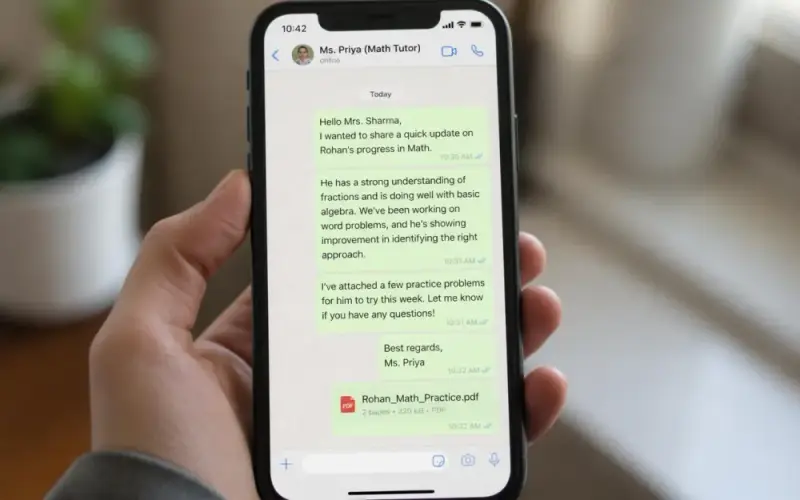
Every error is talked through. You get a WhatsApp summary.
Who teaches your child
Every TaleemSquare math tutor passes the same five checks before their first class. Your child keeps the same tutor each week, and if the fit is not right we switch tutor at no cost. Tutors are based in the US, UK, Canada, Australia, Pakistan and India, and all of them teach in English.
Identity and references checked
Every tutor is identity-verified and reference-checked before teaching a student.
Subject test
Tutors pass a subject test before they are matched with a child.
Spoken-English assessment
Lessons are taught in English, so every tutor passes a spoken-English assessment.
Live sample lesson
Tutors teach a live sample lesson before they are hired, to show they can explain clearly.
Open to parents
Classes are one-to-one in a password-protected room. Sit in on any class or ask for a recording.
How we prepare children for the selective school test
Start from what NSW publishes
We work from the Department's test structure and practice tests, so practice mirrors the real format: on screen, five answer options, paper for working out.
Year 5 and 6 maths first
The questions are based on school maths, so lessons secure the content before timed sets are added closer to May.
Explaining out loud
Your child talks through each step on puzzle-style questions, so the tutor can tell a misread from a real gap.
Reading and writing if you want them
The test also has Reading and Writing sections. We can include comprehension and planned writing, but not Thinking Skills as a separate course.
Simple monthly plans
A$130a month for 2 one-to-one maths lessons a week
About A$16.25 a lesson, or A$21.67 per hour of live one-to-one tutoring.
- Free 45-minute trial assessment, no card details
- No contract, cancel any month
- No registration fee
- 4-class money-back promise
- Switch tutor at no cost
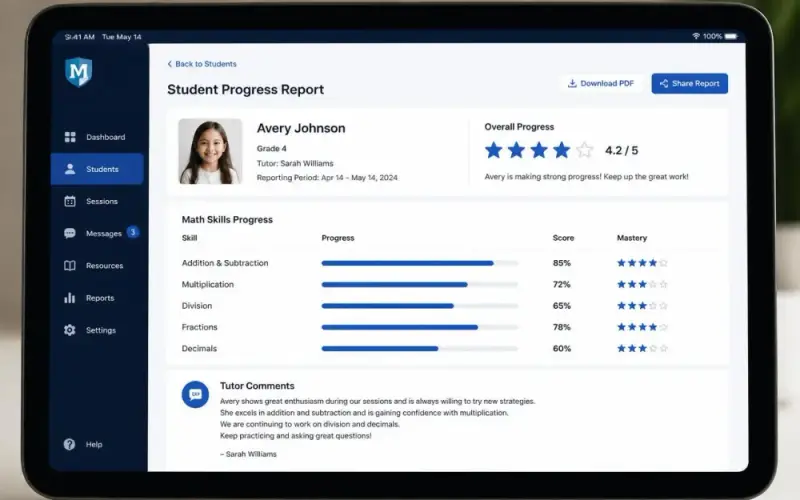
- WhatsApp update after every class
Starter
2 lessons a week, best for keeping up with school
A$130/mo
EnrollGrowthMost chosen
3 lessons a week, best for catching up + building confidence
A$179/mo
EnrollIntensive
4 lessons a week, best for exam prep & fast improvement
A$229/mo
EnrollCommon worries, honest answers
“Will tutoring get my child into a selective high school?”
We cannot promise that. NSW says a quarter of students are successful in gaining a selective high school place, and the score needed changes each year with the number of applicants, how they perform and the places available. Lessons can make the maths familiar and the format less strange, but placement is decided by NSW.
“I don't want my 11-year-old cramming.”
NSW says its test is designed so children do not need to learn or memorise facts about specific subjects. We keep preparation measured: Year 5 and 6 maths first, some timed practice nearer the test, and rest. The free assessment shows honestly whether your child is already well placed.
“The test has Thinking Skills too. Do you teach it?”
Not as a separate course. We teach maths, reading and writing, and we do not run thinking skills, verbal reasoning or abstract reasoning classes. Where a Thinking Skills question is really mathematical problem solving, tutors practise it as part of maths. Our lessons fit best with Mathematical Reasoning, Reading and Writing.
Frequently asked questions
When is the selective high school test and how do I apply?
What is in the selective school test?
How are selective high school places decided?
How much does selective school test maths tutoring cost?
What can TaleemSquare help with for the selective test?
When should we start selective test maths tutoring?
Sources
Book a free 45-minute assessment
Your child meets a tutor for a real one-to-one session. You get an honest read on where they are and what would help, even if the answer is that they don't need tutoring right now.
- 1
We reply on WhatsApp
Usually within 10 minutes, to find a time that suits your family.
- 2
Your child meets the tutor
A relaxed 45-minute session to see their level and how they learn.
- 3
You decide
You get a recommendation and a plan. No card details, no pressure.